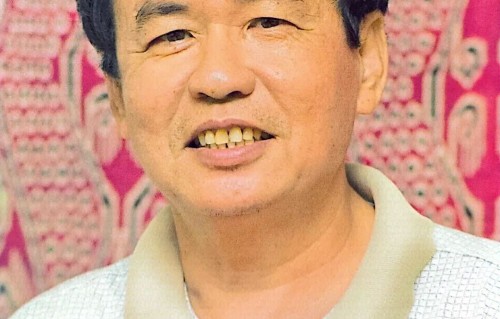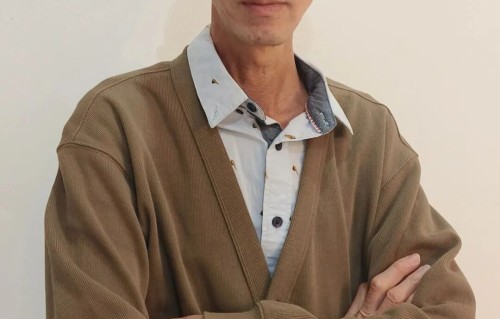


全球诗人 Asif Ahmed (英国)
编者按 Editor’s Note
本集收录英国血管生物学家、诗人 Asif Ahmed 的五首诗作。编者按“身份—亲情—历史—地球—家国”的主题脉络,呈现一条由内而外、由微观至宏阔的情感弧线。每首诗后附全球诗人的英文赏析(Appreciation),从意象、典故、形式与情感内核四个维度细读。
目录 · Contents
- 01I Am Malala
- 02Ami
- 03“Never Again”
- 04We Are Guests
- 05Happy 70th Birthday
About the Poet 关于诗人
A scientist by vocation, a poet by inclination.
Professor Asif Ahmed is a pioneering vascular scientist, entrepreneur and founder of Aston Medical School, whose seminal discoveries uncovered protective molecular pathways and advanced understanding of the biology of preeclampsia — one of the leading causes of maternal and perinatal mortality worldwide.
As Founder and Executive Chairman of MirZyme Therapeutics, Professor Ahmed leads the development of an integrated diagnostic and therapeutic platform for preeclampsia, combining the UKCA-marked M-PREG® diagnostic with first-in-class oral therapeutics designed to predict, prevent and monitor disease progression. His career has spanned academic discovery, medical education, innovation and the translation of science towards improving the lives of mothers and babies.
Alongside science and medicine, Asif has maintained a lifelong interest in poetry. He first published a poem about animals in a children’s book and later gathered a collection in Saffron Tea: An Anthology of Poetry. Although scientific writing and entrepreneurship have occupied much of his professional life, he continues to write verse for pleasure — often at the request of family and friends — reflecting on family, memory, love, loss, faith and the experiences that connect us as human beings.
01I Am Malala
身份与开放的礼赞 · A hymn to plural identity
I am Malala.
My roots belong to India and algebra.
I am the new face of free South Africa.
I am the zest of the modern West,
A kindred spirit of the late George Best.
Garlic, goat cheese and channa chaat,
Are the aromas of my Babylonian heart.
I am the ripple upon a sleeping lake.
I am John Keats and William Blake.
From the foothills of the Yorkshire Dales,
I echo the words of Clement Attlee’s tales.
I am the bricks and plaster of Nye Bevan,
Someday, I’ll graze on the hills of rural Devon.
I sing the songs of Martin Luther King,
I am open to the world like Deng Xiaoping.
My brothers walk with Benjamin Zephaniah,
You can’t cage the Serengeti lion’s ire!
I read Gore Vidal and Adrian Mitchell,
In Wendover, I play cricket at the Witchell.
We dine on pilau and murgh masala,
And we all sing the song “I am Malala.”
I follow the rhythm of the magical harp,
Sometimes I’m sassy and sometimes I’m sharp.
My blues you may compute as my woes,
I am pure poetry and sometimes I’m prose.
Appreciation 赏析
Written in the voice of Malala Yousafzai, this poem is less a portrait of one girl than a manifesto of plural belonging. The speaker refuses a single homeland and instead inherits a constellation: Indian roots and the abstract beauty of algebra; the reborn hope of post-apartheid South Africa; the maverick fire of George Best; the visionary music of Keats and Blake; the civic idealism of Clement Attleeand Nye Bevan, architects of Britain’s National Health Service; the civil-rights dream of Martin Luther King; Deng Xiaoping’s opening of China; the protest verse of Benjamin Zephaniah; and the unfenced wrath of a Serengeti lion. The catalogue technique — a device running from Whitman to Zephaniah himself — accumulates one argument: that identity can be generous rather than narrow, a vessel into which many cultures and causes pour themselves.
The poem delights in mixing registers: Babylonian heart, Yorkshire Dales, peacock cries, pilau and murgh masala, the “magical harp” and the “blues,” so that food, geography, music and literary lineage merge into a single sensibility. Notice how the rhyme tightens as the poem descends — early stanzas rely on slant and scattered echoes, while the closing couplets (Mitchell/Witchell, masala/Malala, harp/sharp, woes/prose) close cleanly. That gathering of rhyme mirrors the gathering of a self. The last line — “I am pure poetry and sometimes I’m prose” — wryly concedes that a life is both lyric and ordinary, and it is this doubleness, the refusal to be reduced to one thing, that makes the title-claim “I am Malala” ring as something universal: to be educated, open and uncageable.
02Ami
母爱与记忆 · The mother as compass and moon
You were my first compass,
Your call guided every stage;
Your hands held me through my falls,
Before I learned the word called age.
As I watch your eyes search for answers,
To names and years that slip from view;
I sit beside you, holding your hands,
Hoping our love, like spring, renews.
You are my sun and I’m your moon,
I’ll always know the way back to you;
If your memory lets go of my name,
My love will still remain true to you.
Appreciation 赏析
“Ami” — Urdu for “mother” — is a quiet devotional lyric addressed to a mother whose memory is fading, her eyes searching “for answers / to names and years that slip from view.” The poet gently reverses the compass: the mother was once the child’s “first compass,” her voice and hands the original guidance; now the child becomes the guide, sitting beside her, hoping love “like spring, renews.” The reversal is tender rather than tragic — the poem refuses to mourn, choosing instead devotion.
The sun-and-moon metaphor is the poem’s emotional centre: the mother is the source of light, the child the body that reflects and orbits her — so even if memory fails and her name is forgotten, the gravitational bond holds. The closing vow, “my love will still remain true to you,” converts the fear of being erased into an act of unconditional fidelity. Structurally the poem is cyclical, beginning with guiding hands and ending with holding hands, the tenderness orbiting back upon itself like the moon it names.
03“Never Again”
历史与良知 · Grief and grace in Kigali
Yesterday Kigali filled my heart with pain,
where silent stones still whisper through the rain.
Their sorrow sleeps beneath the scarred red earth,
a grave reminder of what hatred’s worth.
We cry “never again” with solemn breath,
yet shadows still return as raging death.
They change their colours, causes, flags and name,
yet leave behind the ashes all the same.
Human cruelty marches on through bombs and blaze,
through rubble, ruin and our darkest days.
From city walls to mothers torn apart,
genocide still stains the human heart.
Yet in the gardens, grief gave way to grace,
as flowers rested in that sacred place.
And sunlight through the stained glass softly shone,
like fragile hope declaring not all is gone.
The photos of children, machete-murdered in this place,
showed the pain on every visitor’s face.
Grown-up children still recall what their innocent eyes saw,
when hatred became murder, and murder became law.
Appreciation 赏析
Set at the Kigali Genocide Memorial, this elegy meditates on the 1994 genocide against the Tutsi and the betrayal of the post-Holocaust pledge “never again.” Its opening joins grief to the African soil itself — “silent stones still whisper through the rain” over “scarred red earth.” The second stanza delivers the moral pivot: the cry is renewed with each atrocity, yet the killers merely “change their colours, causes, flags and name,” leaving “ashes all the same.” Cruelty is portable; ideology is costume. The third stanza widens the lens — “bombs and blaze,” “rubble, ruin” — insisting that genocide “still stains the human heart,” locating the failure inside us rather than in any single place.
The fourth and fifth stanzas turn, with deliberate care, from grief to grace: in the memorial gardens “grief gave way to grace,” sunlight through stained glass offers “fragile hope,” and the photographs of machete-murdered children confront the visitor with the precise human cost. The final line — “when hatred became murder, and murder became law” — names the deepest horror: that atrocity was not chaos but legislation, the state itself weaponised. The poem thus travels from landscape to conscience, from the general slogan “never again” to the specific, unforgettable faces of children. Its steadying abab rhyme lends the lament a measured, almost liturgical march.
04We Are Guests
谦卑与共生 · Humanity as guest of the Earth
The sky was peeling. Now the Earth is healing.
In a rage she put us in a cage.
Time is fleeting, not defeating.
We are food that the bugs are eating.
Sooner or later she would roar,
And release her weapon of war.
You may call her the ultimate alligator,
She survived the Vredefort crater.
Now, Holy Kaaba is silent.
Vatican Square is empty.
The invisible virus is visibly violent.
It attacks the Tory and the Lefty.
Life is health.
Science is real.
Service is wealth.
God is surreal.
The sky was peeling. Now the Earth is healing.
Appreciation 赏析
A meditation of the pandemic moment, this poem figures the Earth as an ancient, almost geological power and humanity as her temporary guests. The refrain — “The sky was peeling. Now the Earth is healing.” — captures the paradox of lockdown: skies cleared as human industry halted, the planet convalescing through our confinement. The Earth “put us in a cage,” inverting our dominion; we are “food that the bugs are eating,” humbled by a microbe. The startling allusion to the Vredefort crater— the world’s oldest and largest verified impact crater, in South Africa, some two billion years old — measures her longevity against ours: she survived a meteor, and she will outlast our anger too.
The emptied Kaaba and Vatican Square make the point ecumenically — no faith is spared — and “It attacks the Tory and the Lefty” insists the virus mocks every political tribe. The aphoristic credo at the poem’s heart — “Life is health. / Science is real. / Service is wealth. / God is surreal.” — distils a secular, service-minded ethic; each line a maxim, the final “surreal” hovering between awe and estrangement. By closing on a repetition of its opening, the poem frames crisis as a cycle in which the Earth’s healing requires our stillness — a structure that reads as both prayer and warning.
05Happy 70th Birthday
复兴与希望 · An ode to renewal, 1949–2019
A trillion stars light up the Eastern skies,
An oasis showers in peacock cries,
Out of the ruins the red flag begins to rise,
Watch her surpass disbelieving eyes.
The Red China lets the sunlight in,
Lights up the world, knowledge must win.
A champion of Science helps people thrive,
Her industries sow the seeds to save lives.
Her lanterns on full moon night glow bright,
She fulfills the dreams of billions tonight.
Asif Ahmed · 1st October, 2019
Appreciation 赏析
An occasional ode marking the seventieth anniversary of the People’s Republic of China (1 October 1949–2019), the poem opens in the East — “a trillion stars light up the Eastern skies,” peacock cries, the red flag rising “out of the ruins” — tracing a narrative of reconstruction and ascent meant to “surpass disbelieving eyes.” The second stanza turns from image to principle: “lets the sunlight in,” “knowledge must win,” a “champion of Science,” industries that “sow the seeds to save lives” — a vision of progress gauged by human thriving rather than mere power.
The closing tableau — “Her lanterns on full moon night glow bright,” fulfilling “the dreams of billions” — blends the Mid-Autumn lantern tradition with a people-scale aspiration, light as the poem’s unifying motif (stars, sunlight, lanterns). As a commemorative piece the ode is celebratory and emblematic, its rising, anaphoric cadence (“lights up … lights up”) giving it an anthem’s forward motion. Read alongside the darker poems in this collection, it offers the anthology’s note of collective hope — the belief that ruins can give way to light.
♦ ♦ ♦
Poems © Asif Ahmed.
Anthology polished, arranged and annotated with English appreciation.
“I am pure poetry and sometimes I’m prose.”